TLT 431, Spring 2023 - Course record
- Tom Hammond
Weeks 1 - 2 - 3 - 4 - 5 - 6 - 7 - 8 - 9 - 10 - 11 - 12 - 13 - 14 - 15
Week 01 - Monday, 23 January
During class (ppt)
- Introductions
- Activity: Built environment scavenger hunt / community resources
- This can be done a lot of ways, but I'm using the Field Maps app from Esri – you'll need to install this on your phone
- Log into the app using your Lehigh computing ID
- Search for a map labeled 'Built environment scavenger hunt'
- Start inputting data!
- For discussion & de-brief: Web map on which your data appears (requires Lehigh login): https://lu.maps.arcgis.com/apps/mapviewer/index.html?webmap=e949efad87e142ef924c49d6617bf0de
- Frameworks & goal-setting
- Syllabus review, looking over assignments
After class
- Assignments
- Starting working on your first Original Instructional Material (OIM)
- Writing-to-Learn (WTL): Complete your 'Social Studies Autobiography' (just a webform): https://docs.google.com/forms/d/e/1FAIpQLSdX5krCKkfRd3h8VFFkuUZMhS71cLnW8xZQy4yt9ve9MHTYnA/viewform?usp=sf_link
- Download all of the standards in the folder in CourseSite. Save them on your computer in an easily-accessible space
- Reading
- Skim the C3 standards ('College, Career, and Civic Life') from the National Council for the Social Studies (NCSS)
- Chapin, Ch. 1
- Read NCSS, 2008. In fact, the whole list of NCSS position statements is probably worth bookmarking!
- Read Gaudelli & Laverty, 2017 (find it in the 'Copyrighted readings' folder in CourseSite. FYI: Gaudelli is the dean of Lehigh's College of Ed, so give this a think!
- Optional – again, you can find these in the 'Copyrighted readings' folder in CourseSite: Mehlinger, 1988; Crocco, 2004
Week 02 - Monday, 30 January
Before class
- Complete reading
- Fill out your 'Social studies autobiography'
- Download & organize standards documents
During class (ppt)
- Brief re-visit of frameworks from last week
- New framework: Goals / stances for teaching social studies
- Illustrative activity: Image markup, looking at branches of government
- Purposes of social studies; what kind of citizen?
- Eco as a starting point for discussing civics & the civic-focused mission of social studies:
- Civics standards (light touch)
- Pedagogical standards for teaching civics – let's mess around on the JamBoard here:
https://jamboard.google.com/d/1SjX0j1Up8gK7qXEJj9Iie1bKNgaAzq4UoooVXj_LZGo/viewer
- Closure
After class
- Read civics standards: PDE + C3 civics section
- Westheimer & Kahne (‘What kind of citizen’) – skim; go in depth if you wish
- Chapin, Ch. 7 (“Civic Education & Global Education”, in the 4th edition; note that I’m not fully engaging with the global ed part, but please do read it)
- Complete & bring to class your first Original Instructional Material (OIM)
- Writing-to-Learn (WTL) in CourseSite on standards & question of ‘What kind of citizen?’
Week 03 - Monday, 6 February
Before class
- Complete & bring in your OIP #1
- Complete reading
- Complete WTL
During class (ppt)
- Show-and-tell of OIP #1. (I encourage sharing, so feel free to give copies to your classmates! But it's up to you!)
- I also made a thing! I figured out how to do the Government Game without leaving the room...
- The tool I'm using is ActionBound.com: https://en.actionbound.com/.
- Here's the page that has the backend coding for my game (login required): https://en.actionbound.com/create/GGGSSB
- And on our JamBoard I put some material for the concept development that is required so that this game makes more sense + has a better connection to civics instruction: https://jamboard.google.com/d/1SjX0j1Up8gK7qXEJj9Iie1bKNgaAzq4UoooVXj_LZGo/viewer?f=2
- Framework stuff – what TPACK did we just display? What methods are in our toolbox?
- Now let's talk about standards: What connections might we make (if any) between our OIPs and the civics standards? Note that I have a few ideas in mind, looking at my Government Game
PDE, 3-8: “5.3.8.C. Describe how local, state, and national governments provide services.”
PDE, 9-12: Nothing, really.
C3
“D2.Civ.6.6-8. Describe the roles of political, civil, and economic organizations in shaping people’s lives.”;
…plus, depending on how you structure the groupwork, you have an opportunity to get into “D2.Civ.7.9-12. Apply civic virtues and democratic principles when working with others.”
- Standards & planning in social studies
- The way it's supposed to be done (top-down)
- The way I suggest you do it (backwards engineer)
- One reason (among many) why I have such a critical / stubborn streak when it comes to civics: Act 35
- From the 2018 PA legislature: https://www.legis.state.pa.us/cfdocs/legis/li/uconsCheck.cfm?yr=2018&sessInd=0&act=35
- Citizenship test from the USCIS: https://www.uscis.gov/sites/default/files/document/questions-and-answers/100q.pdf
- Instructional frames
- generic: Giving-Prompting-Making
- something specific for civics: Self-Other-Action
- Closure
After class
Reading
- Chapin, Ch. 2 (planning social studies instruction)
- Optional: Hammond & Manfra, 2009 (this is the Giving-Prompting-Making thing)
- Super optional: Keeler & Langhorst, 2008
- (And a WATCHING assignment! Watch at least part of the State of the Union. I’m not going to hold you to watching the entire thing….)
Assignments
- Complete and turn in your HTCE prep (image set, w/citation & discussion of each image)
- Think about OIP #2; it’s due week after next. If you would like some modeling, see Keeler & Langhorst, 2008 article. It’s dated but demonstrates the idea
- WTL on civics – two things: methods for civics + thoughts on currents events lessons
Week 04 - Monday, 13 February
Before class
- Complete and turn in HTCE prep – don't forget to look at syllabus! It describes the expectations
- Complete reading (and watch part of the State of the Union!)
- Complete WTL
During class (ppt)
- Housekeeping
- Warm up instructional activity – sort of a semi-interactive lecture on types of government. Note that I'm doing it twice: Briefly as a counter-example and then (longer) as an example of what I think would be better. It lives in this JamBoard: https://jamboard.google.com/d/1JfM6Kz7wrrtG5ag1w3CYMR4ydsjDVwbnSTRF0i3rES8/viewer?f=0
- A comment about sequencing / primacy of civics + the need to re-think / re-found our commitment to civics ed
- Civics & games; civics AS a game
After class
- Read Chapin, Ch. 3
- WTL on iCivics
- Complete OIM #2 – don't forget that this one comes in with a reflection!
Week 05 - Monday, 20 February
Before class
- Complete reading
- Complete WTL
- Turn in OIM #2, including reflection! See syllabus for details
During class (ppt)
- Housekeeping & framing ideas to date
- Touching some final resources / activities for civics
- iCivics: https://www.icivics.org/games
- Project Citizen: https://www.civiced.org/project-citizen
- Street Law: https://store.streetlaw.org/lessons/
- Current events! Suggested principles
- Local > non-local
- Engage students: Seek relevance; leave room for voice/choice
- Link to civic knowledge / skills / dispositions
- PA Constitution: https://www.legis.state.pa.us/WU01/LI/LI/CT/HTM/00/00.HTM
- Set up routines
- Civics as the integrative discipline
- Legislated civics
- Constitution Day / Citizenship Day: https://www2.ed.gov/policy/fund/guid/constitutionday.html
- PA Act 70 of 2014: https://www.legis.state.pa.us/cfdocs/legis/li/uconsCheck.cfm?yr=2014&sessInd=0&act=70
- Civics & geography
- Water infrastructure: https://lu.maps.arcgis.com/apps/mapviewer/index.html?webmap=e4f2cc5fe9ce443cbf617166780b5153
- What's in a state name
- Spreadsheet
- Map
- Civics & history
- Signers of Declaration of Independence: https://lu.maps.arcgis.com/apps/mapviewer/index.html?webmap=e4f2cc5fe9ce443cbf617166780b5153
- Civics & economics
- Food supply chain (rare complete example): https://aihstigers.maps.arcgis.com/apps/mapviewer/index.html?webmap=455d0839ee4b4e2cb92978c8b9b38807
- Legislated civics
- Closure
After class
- Read Chapin, Ch. 4
- Complete & turn in Course Plan #1
- Write the history of the world...in 30 minutes or less
Week 6 - Monday, 27 February
Before class
- Complete reading
- Turn in Course Plan #1
- Complete WTL
During class (ppt)
- Housekeeping
- History ed – time to get started!
- Opening activity: "Story of Aaron", using info drawn from http://www2.vcdh.virginia.edu/gos/
- De-brief...
- A couple of frames for history ed
- "History for democracy"?
- History vs. history ed
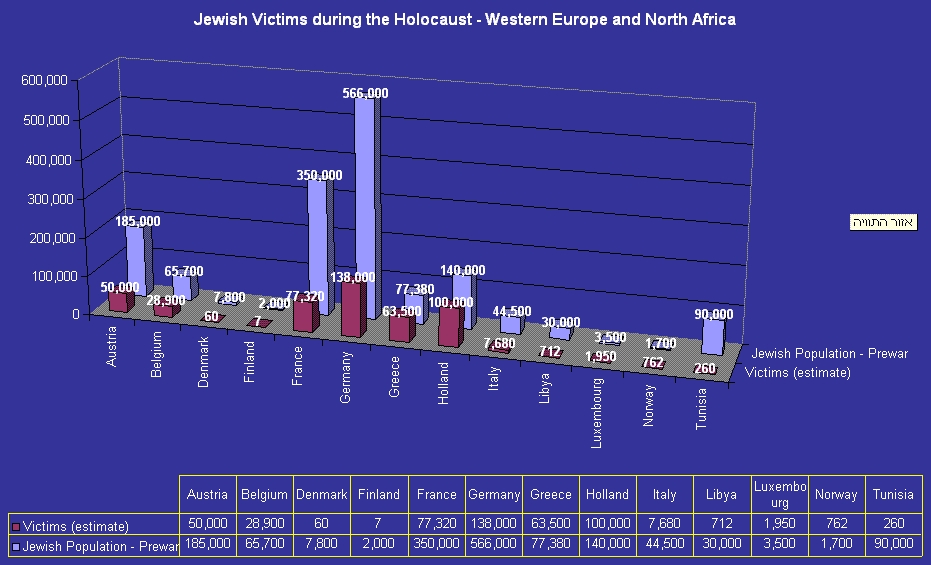
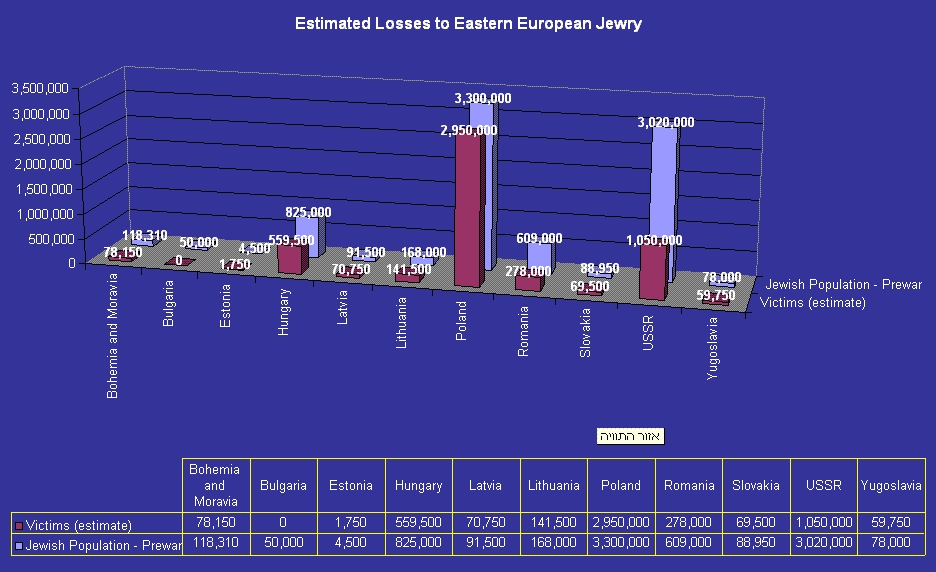
- Activity #2: Jewish populations before vs. after Holocaust
- Starting point
- So I put it on a map
- Using contemporary boundaries... https://www.arcgis.com/home/webmap/viewer.html?webmap=0f952aee6f1142f3a36577c1c3fa81c3&extent=-16.7872,36.2982,69.3457,63.7343
- (Need something that is contemporary to 1933 ... or 1936? 1939?
- An attempted contrast
- Virginia Center for Digital History at UVA: http://www.vcdh.virginia.edu/index.php?page=VCDH
- Digital Scholarship Lab at the University of Richmond: https://dsl.richmond.edu/index.html
- Two tactics for teaching history while engaging civics
- "So what?" strategy
- I did this via a digital documentary tool, PrimaryAccess, but you can do it with anything: https://stagetools.com/vis/pa/
- "Doing history" via Wikipedia...which I think is the best platform for it
- Frederick Winslow Taylor; we'll dip into his Principles of Scientific Management (1912) just briefly: https://archive.org/details/principlesofscie00taylrich/page/44/mode/2up?view=theater
- Entry on Henry Noll: https://en.wikipedia.org/wiki/Henry_Noll
- Demonstrating read vs. write vs. talk vs. history: https://en.wikipedia.org/wiki/East_Palestine,_Ohio
- Example of growth in a Wikipedia entry
- "So what?" strategy
- Opening activity: "Story of Aaron", using info drawn from http://www2.vcdh.virginia.edu/gos/
- Closure
After class
Reading
- Chapin, Ch. 6
- Read history standards (PDE, C3)
- Skim Hammond, 2010 if you want to read more about ‘So what?’ activity
Assignments
- Think about Course Plan #2…but it’s not due!
- WTL: What is your current pattern of use of Wikipedia? Is there a topic in the history curriculum for which you think you might find it useful?
Week 07 - Monday, 6 March
Before class
- Complete reading
- Think about Course Plan #2!
- Complete WTL
During class (ppt)
- Housekeeping
- History education - 'Signature pedagogies'; we'll be dipping in and out of our JamBoard for this: https://jamboard.google.com/d/1SjX0j1Up8gK7qXEJj9Iie1bKNgaAzq4UoooVXj_LZGo/viewer?f=0
- Chronology
- Sourcework
- Narrative...but this needs some help
- Frameworks: One is good, two is better?
- Periodization
After class
- Reading - none
- Assignments
- Complete & turn in Course Plan #2
- WTL on history ed resources (see CourseSite)
Week 08 - Monday, 13 March – NO CLASS; LEHIGH SPRING BREAK
Week 09 - Monday, 20 March
Before class
- Complete & turn in Course Plan #2
- Complete WTL
During class (ppt)
- Discussing remaining assignments
- Current events, history education, and the Inquiry Learning Arc
- Wikipedia as an all-purpose tool for history education
- Content
- Pro-democratic processes
- Reading talk pages: https://en.wikipedia.org/wiki/Talk:Frederick_Winslow_Taylor
- Creating your own articles: https://en.wikipedia.org/wiki/Henry_Noll
- Historical thinking skills
- Images in context: Consider the following two images of the Boston Massacre
- Historical investigation – we'll use the article on the Pledge of Allegiance
- When was it created? Why?
- What historical information on this page is already familiar to you?
- What historical information on this page is unfamiliar to you? How can you corroborate it?
- Wikipedia, generative AI, and the crisis for social studies instruction
- We'll be looking at three responses asking ChatGPT to compare and contrast the cases of Dred Scott and Lucy Berry
- Closure


After class
- Reading – none
- Assignments
- Complete and turn in curriculum map
- Complete WTL on Wikipedia and/or generative AI
Week 10 - Monday, 27 March
Before class
- Complete curriculum map
- Complete WTL
During class (ppt)
- Microteaching demo (sort of)
- Google Earth file I'll be using
- Guided notes sheet.
- Sorting / scheduling our microteaching
- Big Brain Thought #1: Wikipedia, generative AI, and the Inquiry Arc
- Big Brain Thought #2: Pitching a 'pro-democracy' goal for history education, starting with a clumsy parallel with Ibram X. Kendi's work
- Time permitting: Some playing around with images
After class
- Reading
- Wineburg, 2004
- Optional: ISI, 2006
- Assignments
Complete and turn in unit overview- Come to class prepared to go outside! We'll be doing a scaffolded geocache to get started on geography ed
Week 11 - Monday, 3 April
Before class
- Complete reading
- (We're punting on the unit overview – will discuss further during class tonight)
- Come prepared to go outside!
During class (ppt)
- Meeting in lobby of Iacocca! 7:00ish? We will head outside
- Back in class: Let's make sure we're lined up for microteaching next week...
- Geography ed! I have no idea how far we are going to get through this; expect some of these to roll over to next week / week after...
- TRADITIONAL: What's where and what's it called
- A gameified approach: Stack the States / Stack the Countries
- Who can name the most post-Soviet republics? Name which countries in Africa were not created via de-colonization? (Tricky question...)
- Sketchmaps! Draw me a sketchmap of...Iacocca Hall? Canada?
- What is the tallest mountain in North America? Let's take a look via Google Maps...
- DISCIPLINARY - Tools of geography
- Scaffolded geocache
- Other coordinate systems: Try this? https://what3words.com/
- Mapping an orange (see the lesson plan I'm adapting here: https://www.educationworld.com/a_lesson/dailylp/dailylp/dailylp009.shtml
- Photos & video
- Photos
- Flickr map: https://www.flickr.com/map – my usual move is to search for 'mosque'
- 'What the World Eats' activity (see ppt in CourseSite)
- Video – I'll demonstrate this through a couple of things posted to YouTube...but I'm not going to link them in advance
- Photos
- DISCIPLINARY - The whys of where
- So why did the name of the tallest mountain in North America change? Or should we instead say the name(s) didn't change so much as the pattern of use changed? And why did that pattern of use change?
- More playing with names and their significance: What's in a State Name? See this spreadsheet, then this map
- Follow-ups: Can you do this same thing with Canada? Fun trick: Look at maps of Canada in the English version of Wikipedia (https://en.wikipedia.org/wiki/Provinces_and_territories_of_Canada) vs. the French version (https://fr.wikipedia.org/wiki/Canada#Provinces_et_territoires)
- How about Mexico? Guatemala? County names in Pennsylvania? County names in England?
- SOCIAL - Geography is power!
- Initial example of what I'm talking about: "Town map of Bethlehem and vicinity", circa 1758: https://exhibits.lafayette.edu/s/lvhmc/item/35941
- Maps that make a point: https://www.vox.com/2015/5/27/8618261/america-maps-truths
- Geospatial inquiry: Weaving the Globe (this is again a lesson borrowed from elsewhere, in this case an old article in Social Education)
- Geospatial inquiry in students' neighborhoods: Preparing for the Zombie Apocalypse and Other (Un)natural Disasters
- Homebrewing your own localized historical geographic inquiry: Sanborn maps. For example, what's buried underneath Lehigh's College of Business?? (Look here: https://drive.google.com/file/d/1IfeI25VDAmnGXOmCSYM_lvH81lrjvegu/view?usp=sharing)
- TRADITIONAL: What's where and what's it called
After class
- Read Chapin, Ch. 8 (geography ed)
Read Carrigan et al., 2018 (example of a local geospatial inquiry using GIS, doing data collection, etc.)- Complete and turn in unit overview
- Prep for microteaching
- Complete WTL on geography ed resources (can complete later, if needed – microteaching definitely takes priority!)
Week 12 - Monday, 10 April
Before class
- Complete and turn in unit overview
- Complete reading
- prep for microteaching!
- Time permitting: Complete WTL on geography ed resources
During class (no ppt – anything I'm presenting is coming from last week's materials)
- Microteaching!
- Housekeeping
- Geography ed, cont'd (time permitting – will pick up where we left off last week), and let's stop in and expand our JamBoard while we're at it
After class
Read Carrigan et al., 2018 (example of a local geospatial inquiry using GIS, doing data collection, etc.)- Work on microteaching reflection, final assignments, etc.
Week 13 - Monday, 17 April
Before class
- Work on microteaching reflection, final assignments
During class (ppt)
- Wrapping up geography ed (see Week 11 material, above)
- ...at some point we need to re-visit the JamBoard of methods, populating the geography section
- Assessment & social studies
- Generic purposes & assumptions of assessment: sequestered, individual tasks; assessment OF learning vs. assessment FOR learning; accountability / the 'bottom line' vs. the challenges of failure (or being passed along)
- Reviewing things you (may?) already know – formative v. summative, etc.
- Assessment in the context of social studies: What's the bottom line, again? Significance of schema, level of non-information in traditional assessments.
- Examination of the work of Sam Wineburg, Gabriel Reich. Test items as text: compare primary source heuristics & test-wiseness
Assessment resources
- PDE SAS section for finding assessment items: https://pdesas.org/Assessment/Assessment/AssessmentQuestions
- NAEP Questions Toolkit – all of the "Big Four" social studies disciplines get their own assessments! Grades 4, 8, and 12
- NAEP reports, if you want to see how these things have played out over time – for example, how did students fare on the 2010 vs. 2014 assessments?
- Assessment & your instructional unit
- Closure
After class
- Reading
- Carrigan et al., 2018
- Reich, 2009
- Chapin, Ch. 5
- Assignments
- Work on final assignments!
- Post in WTL forum on assessment ideas
Week 14 - Monday, 24 April
Before class
- Complete WTL on assessment ideas
- Complete reading
- Work on final assignments
During class (ppt)
- (Going back to assessment stuff from last week & finishing that off)
- Econ ed discussion
- Some AP resources I'll be referencing
APcentral: https://apcentral.collegeboard.org/
List of courses: https://apcentral.collegeboard.org/courses
AP Micro resources: https://apcentral.collegeboard.org/courses/ap-microeconomics?course=ap-microeconomics
AP Micro course description: https://apcentral.collegeboard.org/pdf/ap-microeconomics-course-and-exam-description.pdf?course=ap-microeconomics
- Example of an online econ ed resource: https://www.whitenova.com/thinkEconomics/
- John S. Morton books – here is his Amazon author page: https://www.amazon.com/John-S-Morton/e/B001K8SOJ0
- Some AP resources I'll be referencing
After class
- Reading
- Econ standards – PDE & C3
- Chapin, Ch. 9 (econ & social sciences)
- (Plus look at econ resources in CourseSite)
- Assignments
- Work on final assignments!
- Come to class with something to share from your unit – I'd be particularly excited to see/discuss someone's alignment map...
Week 15 - Monday, 1 May
Before class
- Work on final assignments
- Bring something to class to share from your final instructional unit
During class (ppt)
- (Food!)
- Sharing from units
- Some final thoughts from TCH
- Example of a data-driven approach to teaching social studies: https://en.wikipedia.org/wiki/List_of_LGBT_members_of_the_United_States_Congress
- Playing around with watersheds & political boundaries: https://lu.maps.arcgis.com/apps/mapviewer/index.html?webmap=de5c4d484ac84542b595f987d8157b75
- ...and then from you: Why teach social studies?
After class
- Reading
- McGrew, 2018 - civic online reasoning
- Highly, highly optional : Manfra, Hammond, & Coven, 2022 - computational thinking
- Assignments
- (Wrap up final assignments! Or at least get as close as you can!)
- Monday, 8 May = targeted turn in date. You will have time to correct / fix anything needed.
- Monday, 15 May = fallback date. Can turn in work here; no guarantee of time to fix it!
- Absolute last ditch turn in = Wednesday, 17 May